- Home
- ...
- Trends and insights
- Achieving packaging circularity with labels

Achieving packaging circularity with labels
Ask any packaging expert what keeps them up at night, and "recyclability" will likely be near the top of the list. It is a deceptively small detail with significant consequences: the wrong facestock or adhesive on the wrong substrate, and an otherwise recyclable container gets rejected at the sorting facility, downcycled, or sent straight to landfill.
In various consumer packaged goods (CPG) segments, including food and beverage, as well as home care, beauty and personal care, brands are under mounting pressure to lead in sustainability without sacrificing shelf appeal. Label material selection has become a strategic decision rather than an afterthought. The way pressure-sensitive labels adhere and perform varies depending on the substrate. Pairing the right labeling solution with PET, HDPE, PP, glass, paper, cardboard, or flexible packaging unlocks cleaner recycling streams, cost efficiencies, and a stronger brand story. Get it wrong, and you undermine the very sustainability claims your packaging is meant to support.
This article breaks down what matters most when matching label materials to packaging substrates, ensuring your next packaging decision is grounded in technical reality, not guesswork.

Why label material choice is a sustainability decision, not just a design one
It is tempting to think of labels purely in terms of print quality, color vibrancy, and shelf appeal. Those factors matter, certainly. However, the facestock and adhesive you choose also determine whether the packaging beneath the label can actually be recycled.
Recyclability is not binary. For a package to be genuinely recyclable, it must be collected, sorted, processed, and reapplied into a new product; miss any one of those steps, and the material gets downcycled or lost from the loop entirely. Labels influence nearly every stage of that chain. A label that does not separate cleanly during the wash cycle can contaminate an entire batch of recycled resin. A liner that is not accounted for adds unnecessary waste. An adhesive that leaves residue on glass can compromise reuse programs.
This is why leading label material suppliers, like Avery Dennison, design their portfolios around the specific recycling infrastructure for each substrate; not a one-size-fits-all approach, but a deliberate match between facestock, adhesive, and the packaging it is applied to.
PET: Precision separation is everything
PET is one of the most widely recycled plastics on the market, but "widely recycled" does not mean "easily recycled." PET bottles and PET trays are processed on entirely separate streams because they differ in intrinsic viscosity (IV): bottles have high IV and are suited to true bottle-to-bottle circularity, while trays have lower IV and are frequently downcycled due to impurities from multi-layer sealing films.
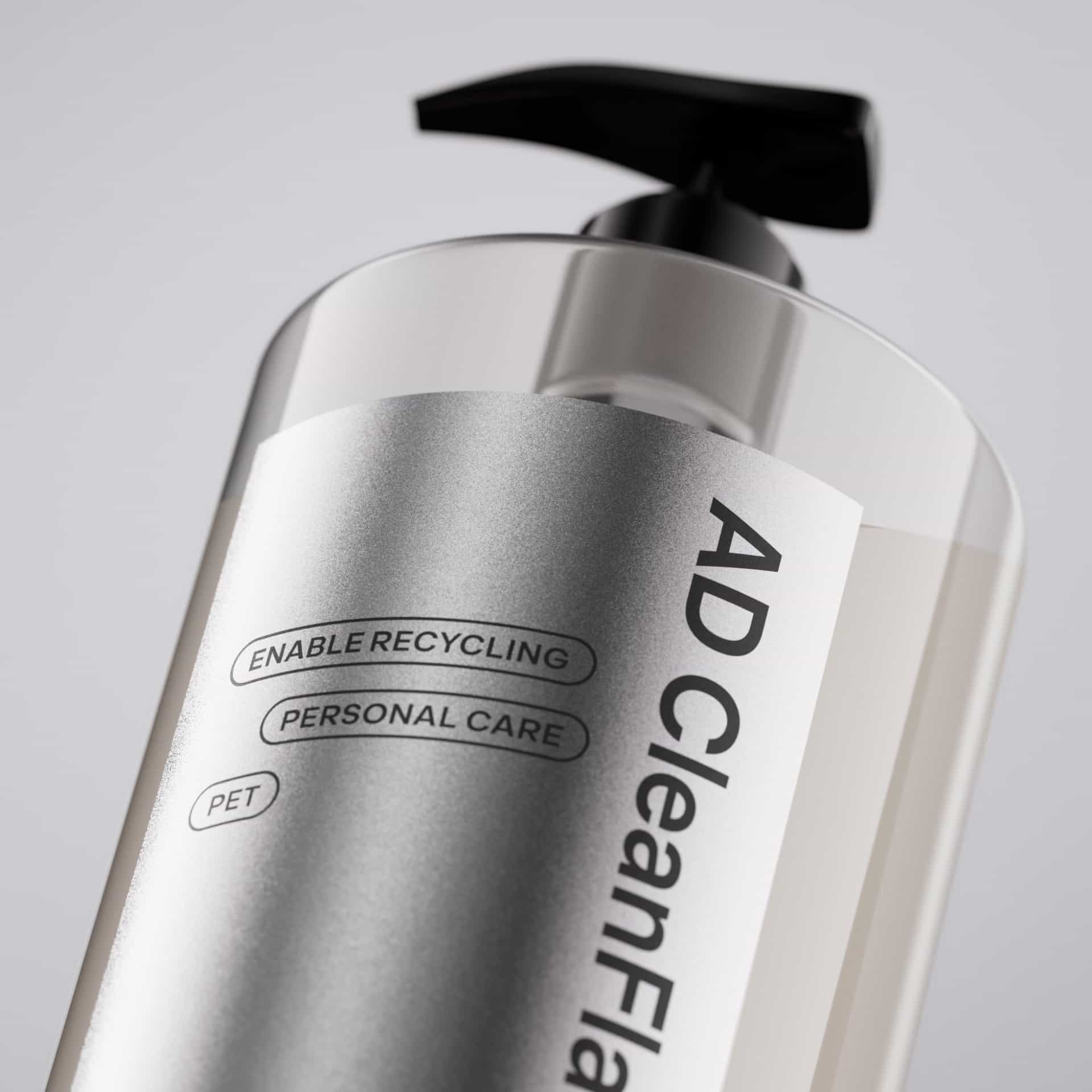
For PET bottles specifically, the recycling process relies on a caustic wash cycle that separates the label from the container. This is where label material choice becomes critical. Technologies like AD CleanFlake™ use adhesives engineered to deactivate during that wash, allowing the shredded label to float free while clean PET flakes sink for recovery. The result is RecyClass-approved performance that supports the Packaging and Packaging Waste Regulation (PPWR) without compromising print quality.

HDPE and PP: Protecting recyclate quality
HDPE and PP are both workhorse plastics across food, personal care, and cleaning product categories, but they share a common vulnerability: contamination during recycling tends to push both materials toward downcycled, non-packaging applications rather than closed-loop reuse.
The HDPE recycling process of sorting, dry-shredding, then wet grinding and washing depends on the self-adhesive label separating cleanly at the washing stage. If it does not, the resulting flake is compromised before it even reaches the manufacturing stage. RecyClass-approved film labels are built specifically to address this, ensuring clean separation and higher-quality recovered material.
Monomaterial construction adds a further layer of protection. When label components — facestock, adhesive, and liner — are made from compatible materials, the entire label integrates cleanly into a single recycling stream without introducing mixed-material contamination. This is particularly valuable for HDPE and PP applications where recyclate purity directly determines whether material can re-enter packaging-grade production.

Glass: Built for reuse, not just recycling
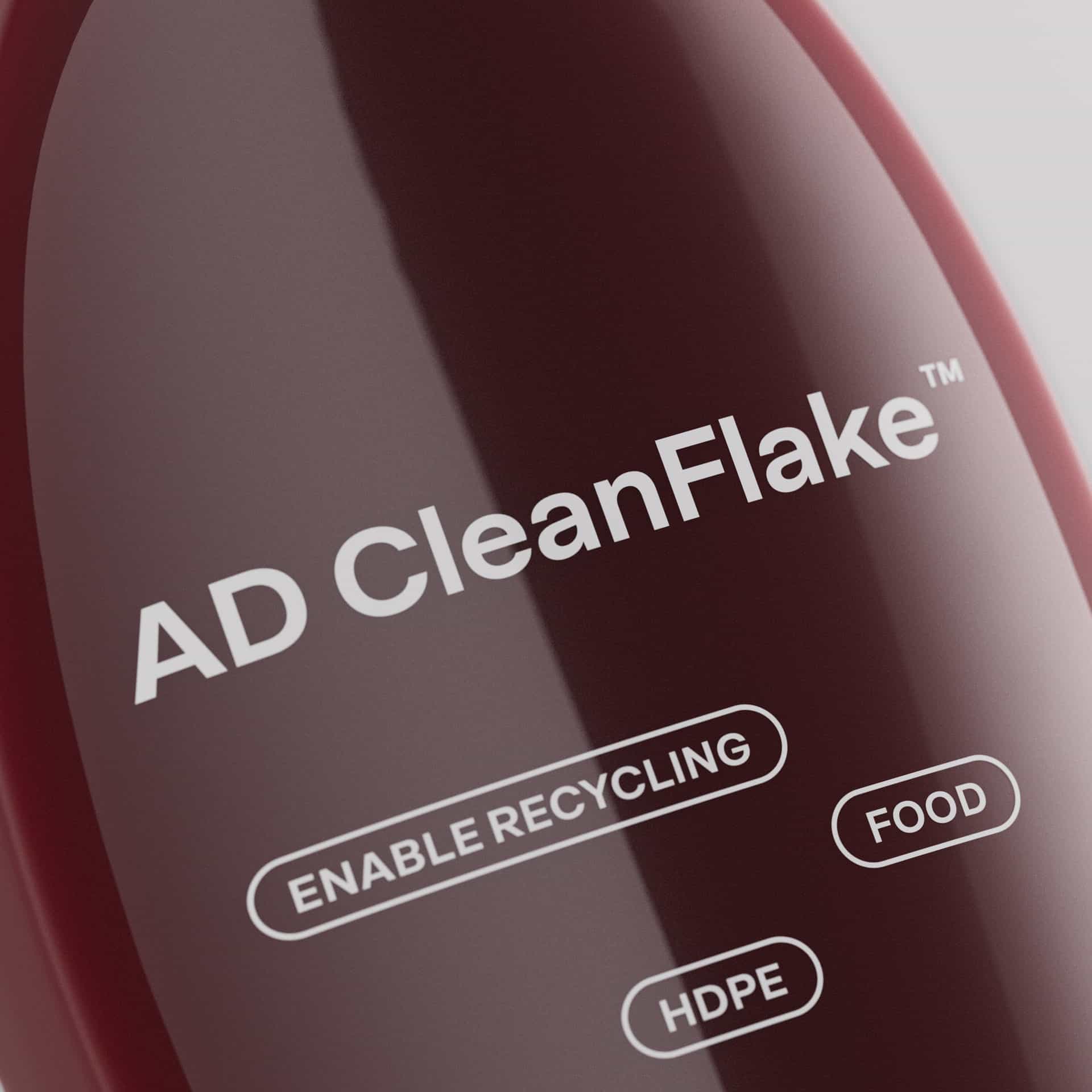
Glass occupies a unique position in the sustainability conversation. It offers a premium canvas for wine, spirits, and craft foods, but more importantly, it is fully returnable and reusable at scale, which is a genuine circularity advantage over most plastic substrates.
That advantage only holds if the label cooperates. Returnable glass goes through industrial cleaning between uses, and the label must either wash off completely or withstand repeated caustic washes without degrading the brand's appearance. This is a fundamentally different technical challenge than PET or HDPE recycling, and it calls for wash-off adhesive solutions purpose-built for glass reuse and return systems.
It is also worth noting that glass manufacturing is one of the more carbon-intensive production processes in packaging. The energy demands of melting raw materials at high temperatures make the embodied carbon of a single-use glass container significant. This makes reuse and refill not just a nice-to-have, but a genuine emissions reduction strategy. The label that enables that transition at food-grade level becomes a critical component of the system, not an afterthought.

Paper and cardboard: Clean fiber recovery starts with the label
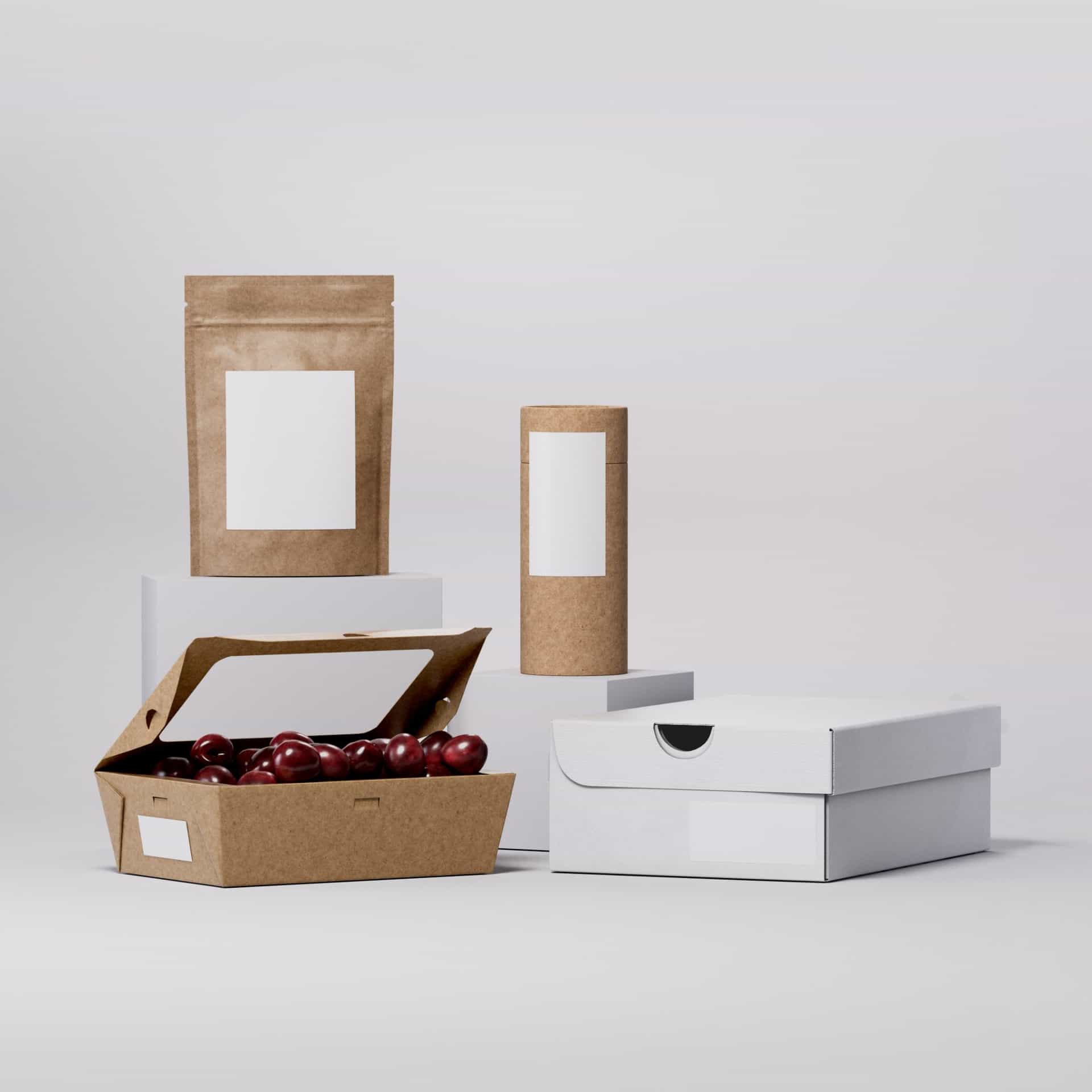
Paper and cardboard recycling is one of the most established recovery streams globally, but contamination remains the enemy. Grease stains, plastic windows, and incompatible adhesives can all disqualify otherwise recyclable material from the process.
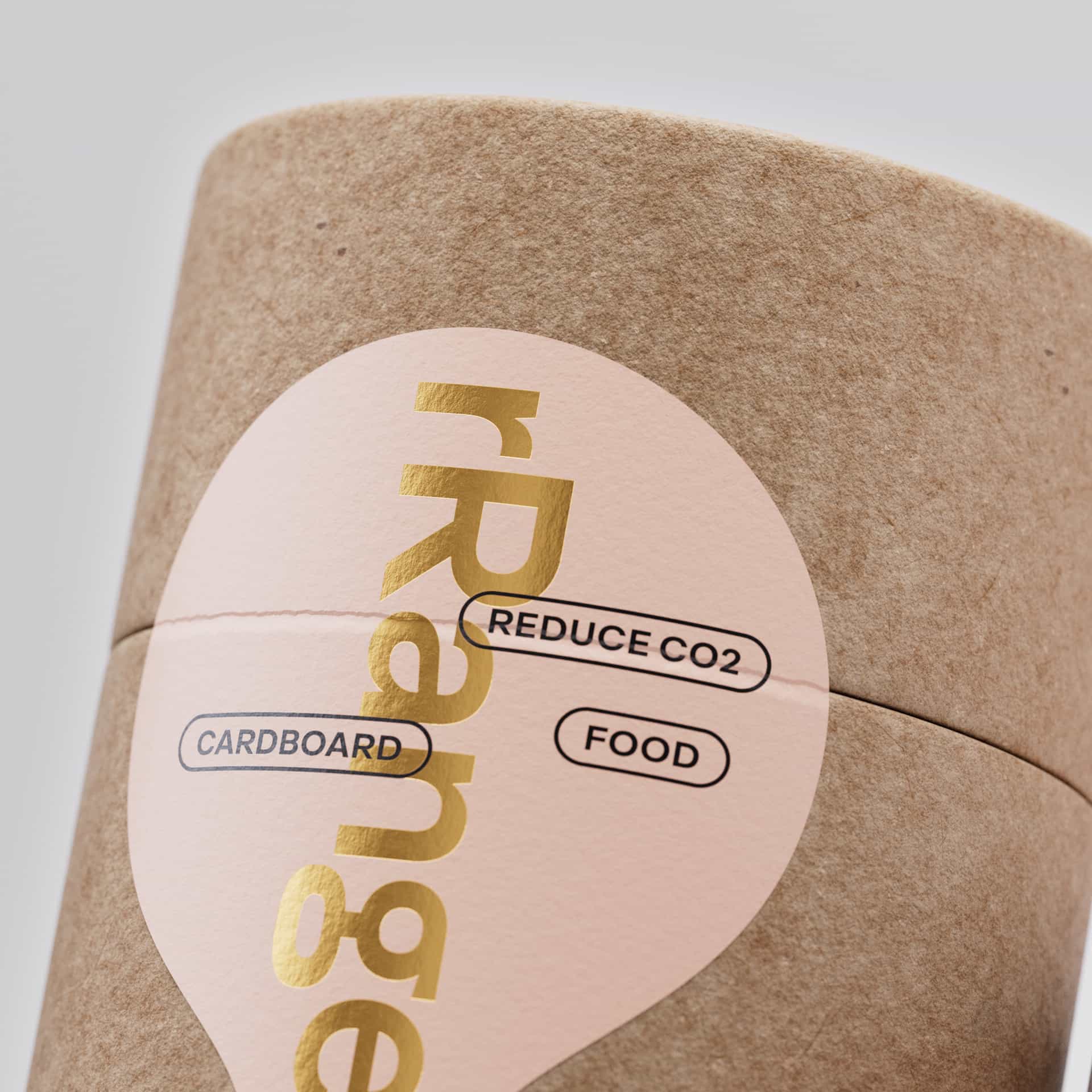
Paper and cardboard packaging is pulped and cleaned during reprocessing to remove inks and adhesives before being reformed into new fibre. For this reason, labels must work with that process, not against it — which is why paper labels are the natural choice for paper-based packaging. Choosing labels made from recycled or renewable materials strengthens this further, supporting fibre recovery while reducing dependence on virgin resources.
Flexible: Navigating a more complex recovery path
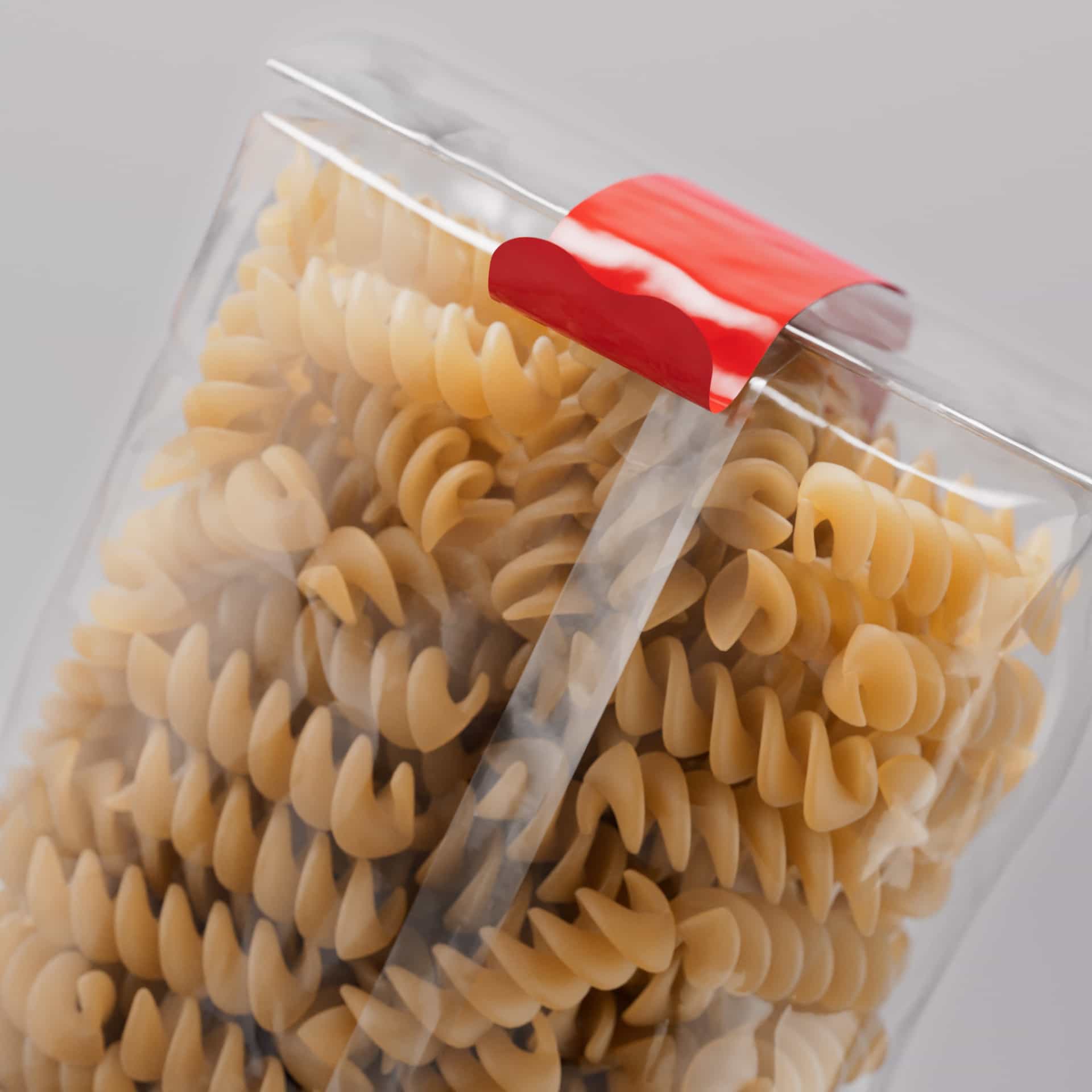
Flexible packaging is a genuine sustainability paradox: it is lightweight, resource-efficient to manufacture and ship, and increasingly popular with consumers, yet it remains one of the hardest substrates to recycle. Mixed-material structures and the limitations of current sorting infrastructure mean flexible packaging is more prone to misclassification or exclusion from recovery streams entirely.
This makes label material choice especially consequential. Monomaterial design principles, where facestock and packaging film share compatible polymer structures, are increasingly recommended for flexible formats, aligning with guidelines from initiatives like CEFLEX's Design for a Circular Economy framework. Functional label features, such as reclosure and resealable labels, can also reduce overall plastic use by replacing hard plastic lids altogether.

The bottom line: Match material to method, not just to look
Across all five substrates, one theme holds constant: the label material that looks best on the shelf is not automatically the one that performs best at end-of-life. Sustainable packaging design requires working backward from the recycling or reuse method your containers will actually go through, then selecting label solutions engineered for that specific pathway.
This is precisely where deep material science expertise pays dividends. Understanding the caustic wash chemistry of PET recycling, the pulping tolerances of cardboard, or the polymer compatibility requirements of flexible formats is not optional knowledge for packaging decision-makers; it is the foundation of a genuinely circular design.
Ready to match the right label material to your packaging type? Explore Avery Dennison's innovative solutions by packaging type, or connect with a specialist to discuss your next project.