- Home
- ...
- Trends and insights
- Transparency in food and drink packaging
Why transparency is a clear winner for food and drink packaging
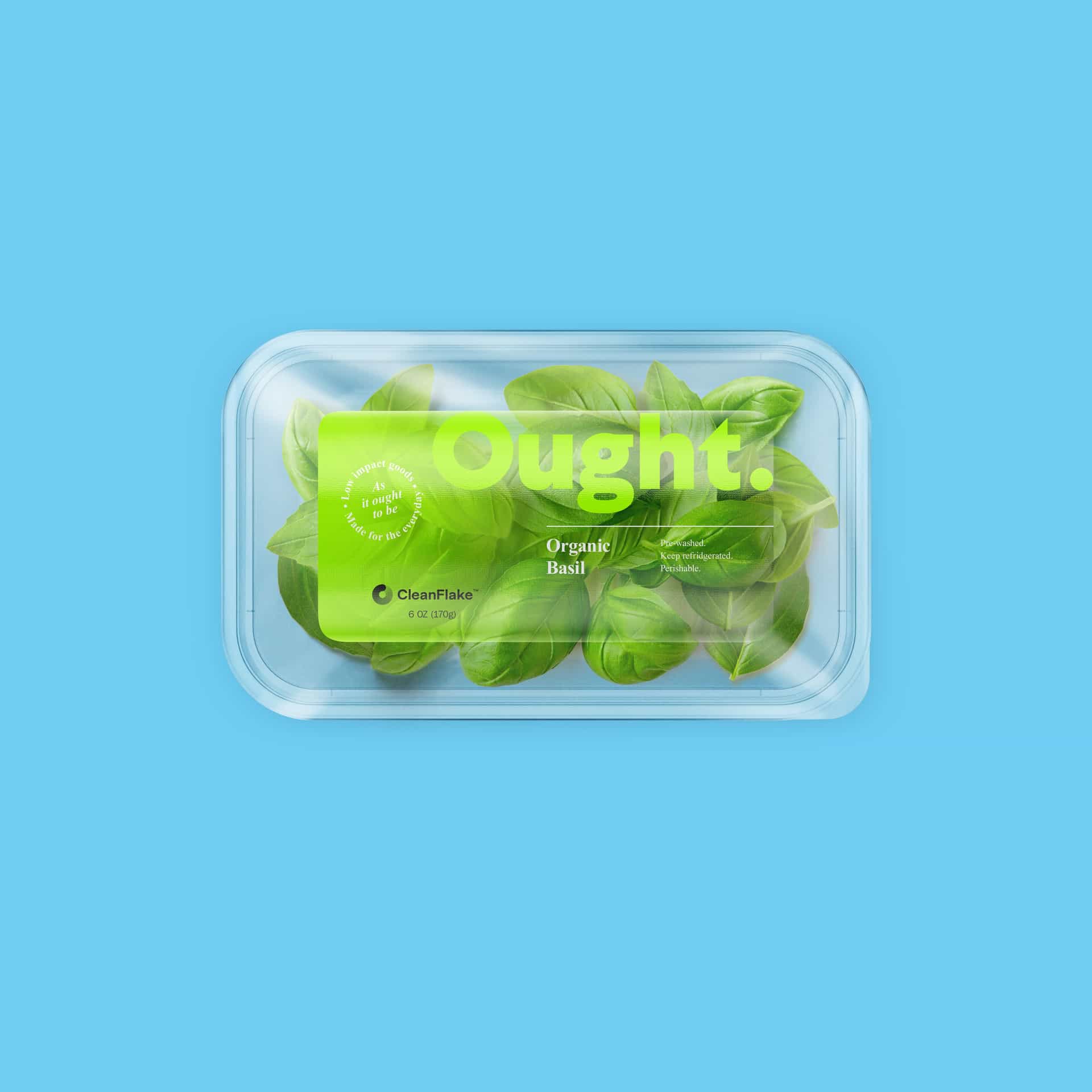
Conscious consumers at the food checkout in 2020 are something of a different breed, whether in-store or online. These are not passive shoppers: they are climate-active and engaged; sustainability-literate, ethically aware and eco-conscious. They have seen Blue Planet on the TV, Extinction Rebellion on the streets and wildfires raging across California. They are buying into lifestyle choices with their eyes wide open; they are living through the age of the new transparency.
The proof is in the data. Recent research by IBM into consumers driving change in 2020 found that nearly six in 10 (57%) were willing to change their shopping habits to reduce environmental impact, with an even greater number, approaching eight in 10 (77%), confirming sustainability is important for them. Tellingly, over seven in 10 (71%) explicitly declared they were willing to pay a premium for brands that provide full transparency.
The sustainability trajectory is plain to see, says Louise Nicholls, currently Managing Director Suseco - Sustainability & Human Rights Consultancy, and previously Corporate Head of Human Rights, Food Sustainability and Packaging at M&S: "Increasingly, consumers are seeking information around how their food is produced, proof of where it comes from and assurance that it is safe. These trends are impacting the end-to-end supply chain, with demand for transparency driving innovation."
Moreover, COVID-19 has only served to raise the stakes for transparency even higher. With food and diet intrinsically related to health, the pandemic has intensified public scrutiny of product and brand provenance and standards, plus red-flagged any areas of concern.
So, as consumers have understandably lost their appetite for risk, their demand for transparency has rocketed in almost inverse proportion – the scales have basically tipped.
As a result, the pressure has very much been on the packaging industry as a community to respond to this new transparency agenda, both pre- and post-COVID, concludes Ms Nicholls: "Leading businesses are starting to take more ownership for the packaging they manufacture or use, even the materials that aren’t widely recycled, such as food-grade packaging and flexible single-use plastics. They are turning to take-back schemes and reusable or refillable packaging to drive this change and help reach long-term goals to phase-out single-use plastics. As a consequence, I think we will see closer partnerships with brand owners, with retailers, with upstream recyclers, and even downstream – with new types of customers, like e-retailers – to think through how this packaging is ultimately going to work in the value chain."
The argument for investing in transparency is therefore undeniably strong in principle. The job of finding the right materials and methods for manifesting those brand intentions, however, presents a different kind of challenge for the food packaging industry, in practice.
What you see is what you want
The market is essentially hungry, in every sense of the word, for innovation and creativity that might enable suppliers and brands to go beyond mere compliance and provide responsive and responsible, maybe even regenerative and restorative, solutions to the question.
In terms of what customers want, however, whilst the answer might be clear, it is not exactly simple. Traditional business-as-usual approaches to packaging and labels will not suffice – this is the new transparency; and it calls for a new design process and method of manufacture.
So, when it comes down to physically delivering on the promise, material science holds the key.
Indirectly, therefore, the end-user is challenging the likes of label suppliers to innovate, despite their supply-chain relationship being at one remove, as the customer’s customer. This pull-through effect sees the demand for transparency driving trade supply, especially at the more specialist and luxury end of the retail market and in sustainable packaging materials, explains Luuk Zonneveld, Product Manager Select Solutions, Label and Graphic Material Europe, at Avery Dennison: "There is a clear drive for premiumisation happening in the Food & Beverage (F&B) sector. Consumers increasingly look for more artisanal and higher-quality products. As these types of products are generally more expensive, they want to be able to see what they are buying, which drives the need for more transparent packaging materials and labels."
It is not just that purchasers are needing to visually validate that produce and products meet their expectations, it is more a matter feeding their desire and motivating spend. In essence, we have moved from a ‘seeing is believing’ mindset, to a world of ‘what you see is what you want’.
For labels, this trend is fuelling growth in transparent polypropylene (PP) solutions. Now widely used, these are effectively aiming for the ‘no label look’ by using a polyethylene terephthalate (PET) liner – so called ‘clear-on-clear’. These PET liners help eliminate roughness in the adhesive for enhanced clarity, this complements the associated need for colourless adhesives.
The challenge with PP films, however, is that by default they are not easily printable, which has resulted in a lot of R&D going into making that process easier and better, by adding a topcoat. Topcoating (PP) film labels can offer a powerful way to increase durability and printability while also adding shelf appeal and communicating a brand’s signature look and feel.
It is also often the case in a shop or supermarket, for example, that there is a requirement for late-stage printing of various essential retail features, such as barcodes, plus price and ingredient information. Traditionally, the common solution has been a process called Direct Thermal Printing which utilises paper labels. When applied to a food product, however, paper not only proves sensitive to moisture and grease, but will fundamentally block the consumer’s view of the contents, too.
By contrast, as the name implies, Transparent Direct Thermal labels offer a viable alternative which eliminates the disadvantages typically associated with paper. Here, the innovation challenge is focused on the coatings which make a product Direct Thermal printable. As a result, it becomes possible to maintain high shelf-appeal using see-through packaging, even when there is a need for variable information – as with foodstuffs such as pre-packed fruit and sushi.
Holistic, aspirational, and radical
Whilst technical challenges to be overcome include working with different product shapes, plus types of packaging materials and conditions (such as heat, cold and moisture content), there are also the twin drivers of legislation and, ultimately, sustainability (incorporating end-of-life).
In the F&B sector, of course, first and foremost it is essential for many solutions to be ‘food approved’, which is critical for compliance with EU regulations. In addition, both the European Waste Framework Directive, plus specifically the Packaging and Packaging Waste Directive, are legislative priorities for brands.
So, when it comes to the new transparency, circular economy considerations are a critical part of any specification change or innovation push. It is not only important to consider how a label is affixed to a product in the first place, for instance, but sometimes how it can then be removed efficiently in industrial recycling scenarios further down the line.
The cutting-edge CleanflakeTM technology for labelling the likes of PET bottles is a case in point. Its clever design employs a switchable adhesive that sticks firmly during the package’s use, but then deactivates in the caustic bath that forms part of the recycling process.
As a result, the label material separates from the PET – the label floats to the surface and the clean PET flakes sink, leaving no label or adhesive residue in the PET stream – so achieving transparency goals in use, enabling true circularity through bottle to bottle recycling.
This sort of attention to detail underpins a more holistic approach to product development, that takes whole-life thinking and the full value chain into account, concludes Luuk Zonneveld: "Thinking beyond point-of-use, to end-of-life and on into the afterlife, we are taking a whole new approach to product development right now, because we see a real need for change in our industry. Our R&D is inherently sustainability-driven; and, through our Eco-Design approach, we are committed to making every product we develop more sustainable than its predecessor. This purpose-driven innovation is the new transparency at its most aspirational and radical."
From the supply chain to the shelf, therefore, the new transparency is emerging as a competitive differentiator for brands, as well as a pathway to a fairer and more environmentally friendly food and beverage sector. Its intuitive linkages with expectations of safety and notions of trust help build consumer confidence and brand loyalty by way of positive association and enjoyable user experience, as seen in neuromarketing.
Ultimately, this virtuous spiral of customer satisfaction and reputational gain on the part of brand owners represents a potentially regenerative force for retail, in the round.
This is sustainability at work. This is the new transparency.