- Home
- Perspectives
- Power of the small
The Power of the Small: Why Retail’s Biggest Transformation Began with Its Smallest Component
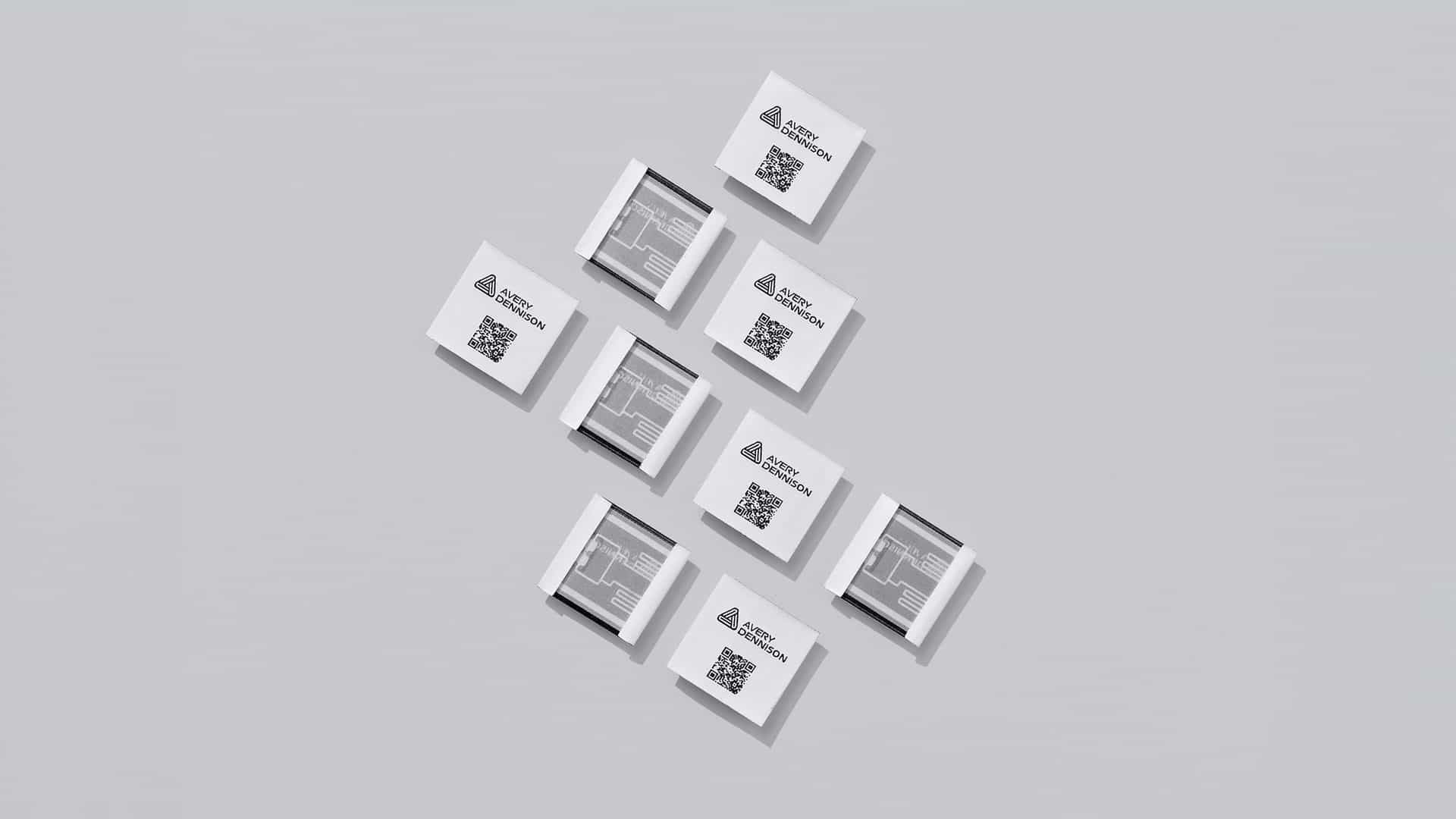
For more than a century, retail's smallest constant shaped its biggest shifts. And while its size stayed small, its capability exploded. The apparel industry is no stranger to monumental disruptions – from the rise of global e-commerce to the urgent mandate for circular business models. Yet, as brands look for the next competitive edge, the solution isn't found in massive infrastructure overhauls or sprawling architectural pivots. It lives in a tiny piece of fabric already sewn into every garment you manufacture.
Loading
The Evolution of the Label: From Passive Marker to Intelligent Brain
To understand where retail is going, we must look at where it began. The humble clothing label started as a purely functional asset. In its earliest days, it carried basic information: a manufacturer's name and a geographical location. It was a stamp of origin – nothing more.
With the mid-century invention of synthetic fibers, garment care became complex. Different weaves demanded specific washing instructions, and the label evolved to carry practical guidance for the consumer. As the mid-20th century progressed, a cultural shift occurred. The rise of designer fashion houses transformed labels into brand identifiers. The label became a statement of status, a mark of authenticity, and a crucial design choice.
At Avery Dennison, innovation is woven directly into this history. In 1935, Ray Stanton "Stan Avery" invented the world's first self-adhesive label. It was a bold idea that changed packaging and product identification forever. Today, that legacy of pioneering spirit continues as we transition from the physical to the digital world.
For 90 years, the label had one job: to tell you what something cost. Then, it told you what it was made of. Today, that label has evolved from a passive piece of paper into an active, intelligent sensor. It’s no longer just "marking" a product; it is "talking" to your supply chain, defending your brand against shrink, and acting as a digital passport for a circular future. The label didn't just get a new look – it got a brain.
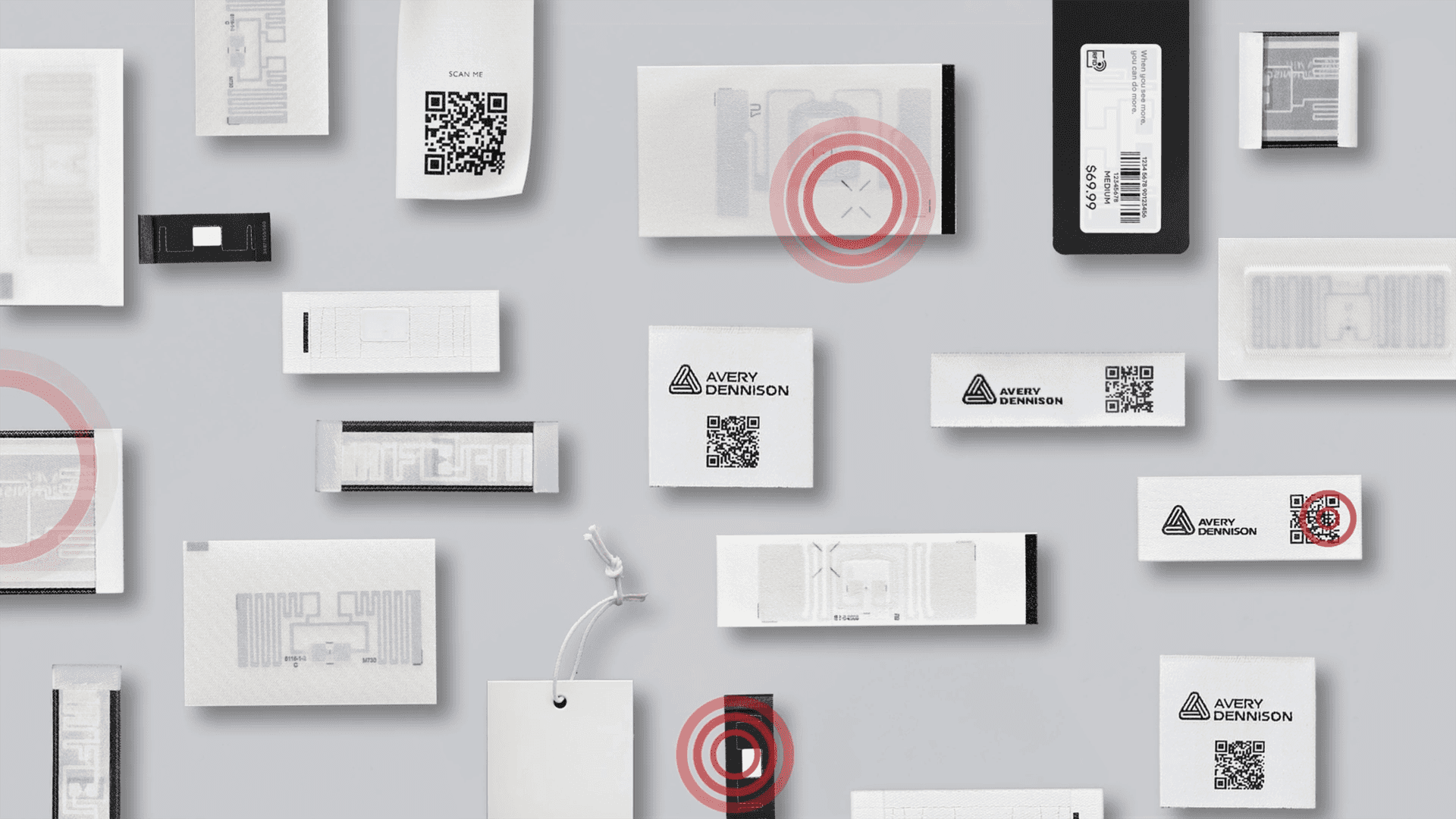
By making a simple, small update – embedding Radio Frequency Identification (RFID) technology into your existing tiny care label or brand tag – you instantly connect your physical product to a digital world, unlocking infinite possibilities.
One Small Update. Infinite Business Outcomes.
Embedding an RFID tag into an apparel label is a subtle shift in production, but its ripple effects across an enterprise are profound. When a garment can identify itself, share its history, and broadcast its precise location in real time, it shifts your entire business from reactive guessing to predictive precision.
The impacts of RFID are transformational
- Near-Perfect Inventory Accuracy and Speed
Traditional supply chains are plagued by inventory blindness. Without item-level visibility, typical retail inventory accuracy hovers around 65%, according to Auburn University. Utilizing embedded RFID tags restores accuracy, lifting it up to 98%. Furthermore, RFID increases the speed of physical inventory counts by over 75%, eliminating labor-intensive cycle counts and allowing store associates to focus entirely on customer service. - Revenue, Margin Uplift, and Capital Efficiency
When availability becomes reality, stockouts disappear. Improved allocation and replenishment drive a measurable 2% to 5% sales uplift and higher full-price sell-through. Because greater item visibility reduces the need for safety stock, it improves inventory turns and unlocks critical working capital that would otherwise be tied up in excess warehouse supply. - Supply Chain Visibility
In an omnichannel world, “available” only matters if it reflects verified inventory truth. RFID helps eliminate blind spots in the supply chain by up to 43%. Demand signals move upstream much earlier, drastically improving inventory allocation across distribution centers, reducing product distortion, and limiting unnecessary production waste. - Shrink Improvement
With over $112 billion lost to annual US shrink and Organized Retail Crime (ORC), traditional security gates are no longer enough. Serialized tracking via embedded RFID tags enables granular pattern detection and evidence-backed loss prevention. This item-level insight drives a 15%+ shrink improvement across operations. - Elevated Shopping Experiences and Consumer Engagement
Modern consumers expect friction-free shopping. RFID facilitates rapid, automated self-checkout terminals, eliminating long checkout lines. When paired with a consumer-facing trigger like a QR code on the same label, the digital identity expands further – pulling up transparent sourcing data, styling tips, or loyalty rewards with a simple smartphone scan. - Advancing Circularity
As global sustainability regulations tighten and textile waste becomes a massive problem for our industry, efficient textile waste collection is more important than ever to ensure more materials are reused or resold instead of being sent to landfil. RFID-enabled sorting can accelerate the transition to garment-level circularity. Read the white paper “RFID for Circularity” to learn more.
Fueled by Data, Optimized for Tomorrow
While the immediate benefits of RFID center around visibility and operational excellence, the long-term competitive advantage lies in data collection. Every scan, every tracking point, and every transaction generates clean, structured, item-level data.
When this data is fed into modern enterprise systems, it serves as the foundational fuel for predictive modeling and advanced analytics. Brands can accurately forecast demand, dynamically adjust production runs to mitigate overstock, and optimize markdown strategies. While the broader conversations in technology focus heavily on complex algorithms and advanced artificial intelligence, the truth remains: those digital minds are only as good as the physical data they receive. The embedded label is the essential link that feeds them.
Embracing the Power of the Small
The future of apparel retail isn't about making massive changes to the way garments are worn; it’s about changing the way garments communicate. By choosing to embed digital intelligence into the smallest component of your product, you unlock the visibility needed to thrive in a highly volatile market.
For more than a century, retail's smallest constant shaped its biggest shifts. As its size stayed small, its capability exploded. The Power of the Small is clear – the ultimate tool for business transformation has been sitting in your garments all along.
Sign up for our RFID Newsletter for the latest innovations and insights in RFID.
Ready to transform your business from the label up?