- Home
- Solutions
- By packaging type
- HDPE and PP packaging

Maximizing the recovery of HDPE containers requires a label strategy that preserves the quality of the recycled material.
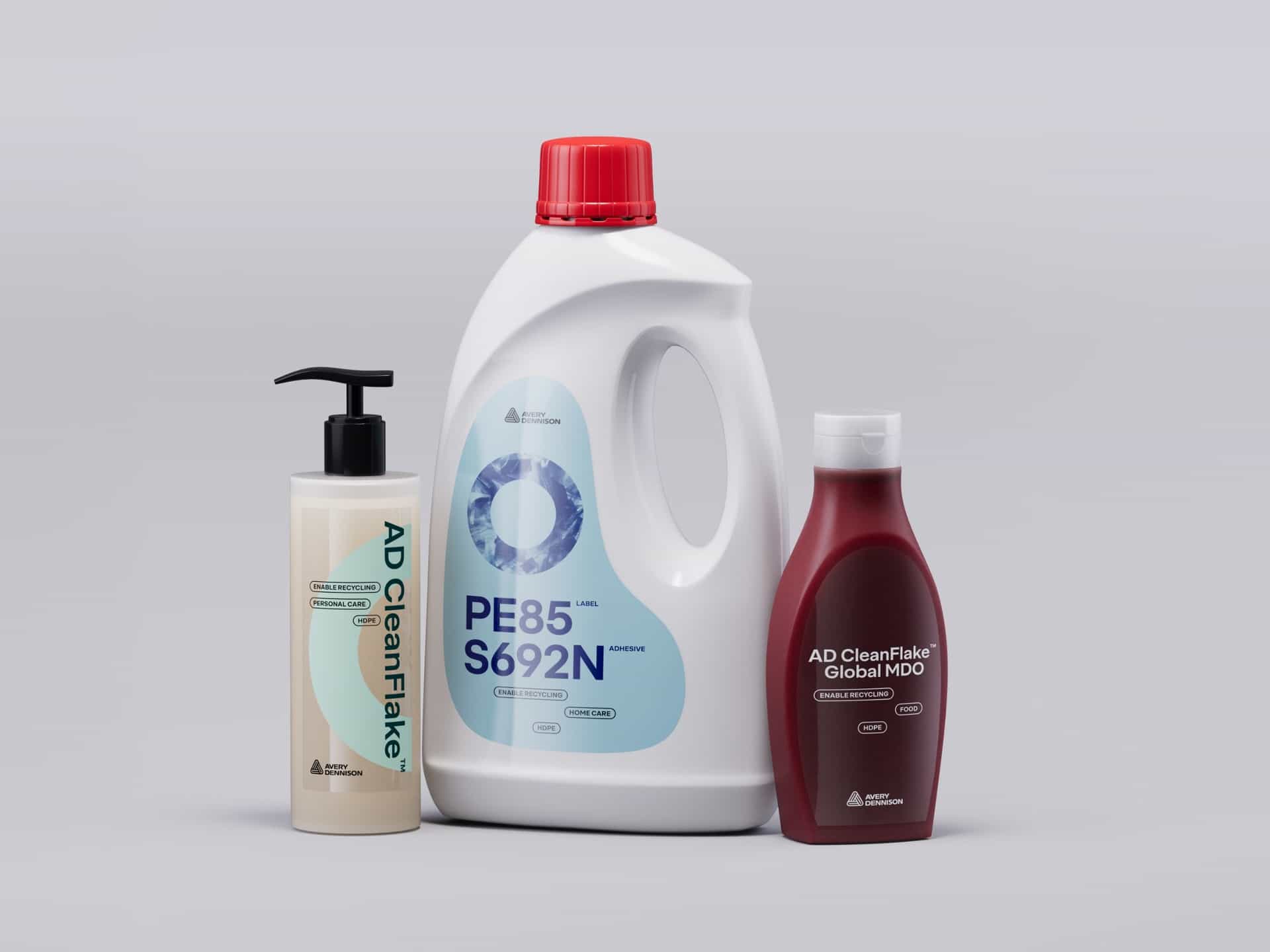
Whether you're managing a diverse consumer goods portfolio or a single product line, our label solutions are engineered to help maintain compatibility with rigid plastic recycling streams. Our RecyClass-approved film labels are designed to facilitate clean separation during the recycling process — helping support high-quality material recovery by minimizing contamination of the HDPE flake. This technical approach helps you meet circularity goals while ensuring your branding remains durable and vibrant throughout the product's life cycle.
What is HDPE and PP packaging?
Loading
HDPE packaging
HDPE (high-density polyethylene) is a strong yet lightweight form of rigid plastic used in food and beverage containers, personal care products, cleaning products and more.
- One of the most widely used types of plastic
- Non-biodegradable and must be recycled
- Typically recycled into non-packaging products
PP packaging
PP (polypropylene) is a durable yet lightweight and versatile form of rigid plastic used in food containers, home and personal care applications, medical applications and more.
- Widely used plastic across multiple applications
- Highly recyclable in many industries, although often downcycled into non-packaging products
- Increasing investments in infrastructure are aimed at enabling closed-loop PP recycling
How HDPE is recycled
HDPE packaging is separated from other materials at the recycling facility and sent into its own recycling stream. Using a RecyClass approved self-adhesive film label that separates easily helps ensure the final HDPE recyclate is clean and high quality. The process follows a circular path:
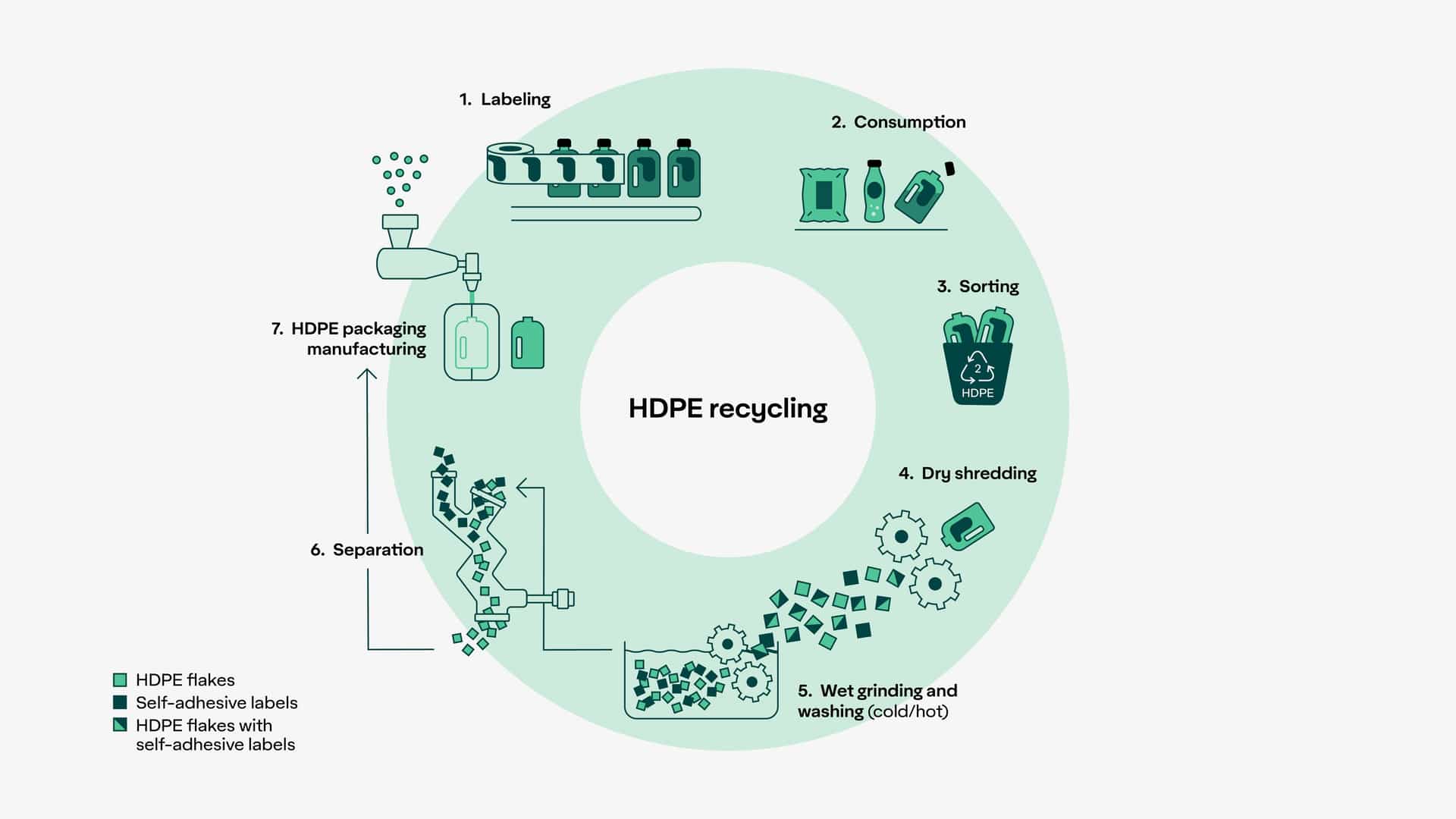
- Sorting and shredding: After use, HDPE packaging is sorted and dry-shredded into smaller pieces to prepare it for the recycling process.
- Wet grinding and washing: Wet grinding and washing release self-adhesive labels from the plastic flakes, enabling clean separation in later recovery stages.
- Manufacturing: Clean HDPE flakes are then processed and used to make new HDPE packaging, supporting material recovery and circularity.
Our solutions
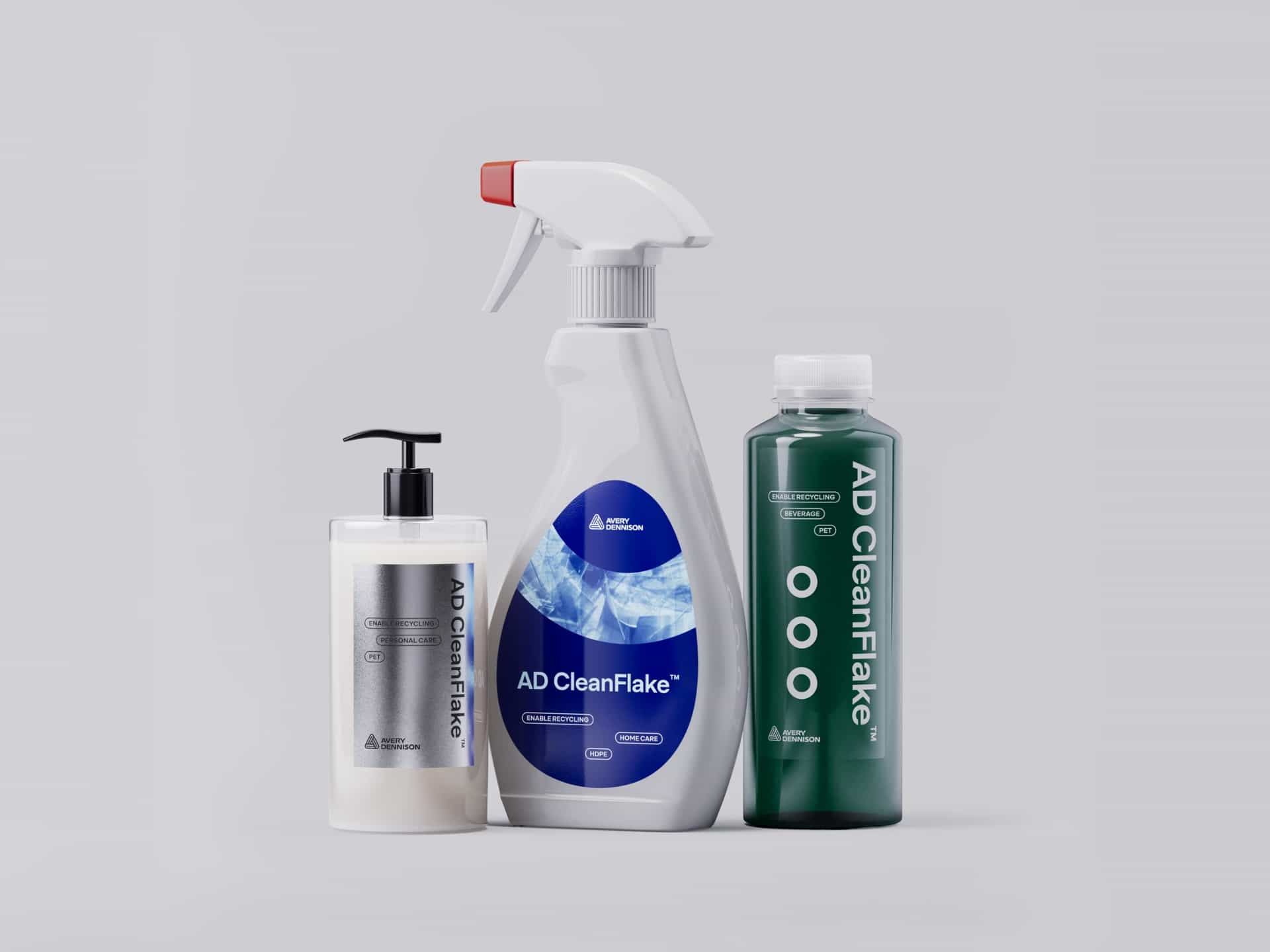



Ready to evaluate your label portfolio for PPWR compliance?
Connect with Mariya to explore film innovations and build a data-driven strategy to transition away from your incumbent paper setups with confidence.